
Why Gefjun is spelled that way — and what it costs to get it right
There is a version of this name the early internet had to settle for: gefjon. This is the file on how Gefjun replaced it.
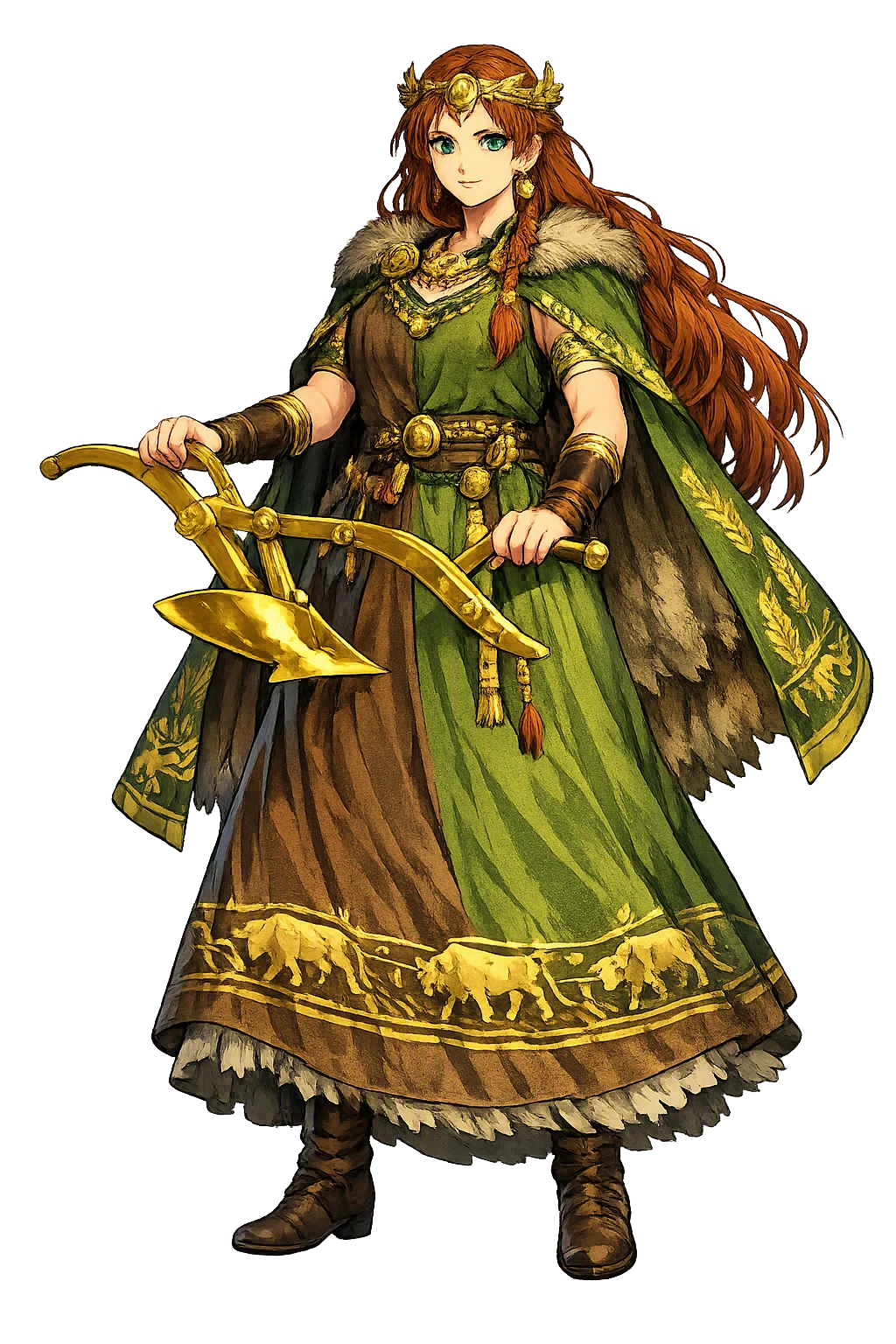
Gefjun has one of the few land-creation myths in the whole Norse corpus, and it opens the Prose Edda itself: the ploughing of Zealand. Around that single great deed the sources add a catalogue entry, a dynastic marriage, and one sharp exchange in verse.
At a Glance
- Restored name: Gefjun
- ASCII form: gefjon
- Meaning: "Giving"
- Domain of influence: Fertility, Agriculture
- Pantheon: Norse
- Classification: Tier 2
- Original script: ᚴᛁᚠᛁᚢᚾ
- Series: The Restoration Files, No. 135 of 397
The Name Before the Marks
Spoken, the name runs `/ˈɡev.jun/` — 'GEV-yoon' — the g hard as in 'give', the e short as in 'bed', the second syllable like 'yoon' with a light v-glide before it; stress the first syllable, as in modern Icelandic Gefjun.
The Temple That Stands Now
The restored name is not a plaque; it is an address. The temple of Gefjun lives at /sites/gefjon/, with its mythology in the lore halls, its peer-reviewed record in the Scholarly Edition, and its place in the pattern atlas on the patterns floor.
Tier-2 here means one preserved truth — not less important, just singular. The temple shows it and names it.
Where the Name Stood First
Gefjun is a textual goddess whose evidence is a landscape. Her attestations are literary — the Codex Regius Lokasenna, Snorri's Gylfaginning, and the Ynglinga saga of Heimskringla — and no cult site, votive deposit, or runic inscription names her; the place-name claims sometimes advanced are insecure. What the myth itself offers as evidence is the map: Zealand's headlands and the bays of Lake Mälaren, which the story explains as the two halves of a single tear. Her one fixed point on the ground is Hleiðra — Lejre, near Roskilde — where the saga seats her marriage to Skjöldr; excavations there since the 1980s have uncovered successive great-hall complexes of the Iron Age and Viking Age, confirming Lejre's real antiquity as a royal power centre, though nothing found names the goddess. The oldest datable witness to the myth is not a stone but a stanza: Bragi's ninth-century verse, quoted by both Snorri and the saga. Her most famous monument is modern: Bundgaard's Gefion Fountain in Copenhagen, unveiled 1908. The temple on the web is the newest of these addresses — the first one that fits in a pocket.
The Archetype at Work
The pattern atlas seats this temple in 3 industries, each match argued and weighted: Agriculture, Food & Harvest (the ploughing goddess — four giant sons yoked as oxen to tear a country from the soil.); Mapping & Geospatial (zealand dragged from Sweden into the sea, Lake Mälaren left as the mould — mythology's boldest map edit.); Faith & Spiritual Organizations (fourth among the ásynjur — those who die maidens serve her.). The Resonance File reads those seats through the myths themselves.
In the Sacred Texts
The Norse tradition is not a vibe; it is a library. The Sacred Texts collection holds Poetic Edda and Prose Edda — the primary sources the temple's scholarship is built on. The temple is the argument; the texts are the evidence.
The File Continues
The temple's founding dispatch tells the name's story; its Resonance File reads the myths into the industries; the blog index holds the whole archive.
Continue the series — previous file: Gē (read it here) · next file: Gilgameš (read it here).
The Restoration Files are written from the same canonical record as the temples themselves: the lexicon, the lore catalog, the pattern atlas, and the cited scholarly sources. If a file ever disagrees with its temple, the temple is right — tell us, and the file will be corrected.